
Ensure your uploaded files clearly display all required verification details in a single page or across multiple pages. When testing brokers, if any compliance message or alert feels off, we never reply, open attachments, or click embedded links. Instead, we close the message, open a fresh browser tab, and navigate directly to the broker’s official website. We then log into our secure client area to check for real alerts or contact the broker’s support team directly to verify if the request was authentic. Protecting your sensitive information does not end when the broker receives your documents. You must also manage the files left on your own hardware, as many identity theft cases stem from compromised personal devices rather than broker database breaches.
Ebury Partners with KYC Startup LoopingOne, Invests €800K
In addition, with the increasing significance of data privacy, regulators are imposing stricter rules on businesses to safeguard customer data and use KYC information solely for its intended purpose. Balancing due diligence to protect customer data, while fielding the risks of financial crime, can be difficult to balance. Coupling these challenges with the growing digitization of the KYC process, it can be difficult for institutions to keep up with regulations. Some reputed businesses use secure digital forms and identity capture tools to check information in real time.
Data collection and customer identification

It’s not just about collecting personal data; it’s about verifying identities to prevent money laundering and other illicit activities. The pandemic and advancements in technology have made digital banking more common, with an expected 65.3 percent of the United States population using digital banking in 2022. This has made KYC even more crucial during the customer onboarding process, which is now often done online and remotely. KYC is a set of procedures and guidelines that financial institutions use to protect themselves from online fraud and money laundering.
How long KYC verification usually takes
These portals safeguard data transmission using advanced Secure Sockets Layer (SSL) or Transport Layer Security (TLS) encryption. As a pioneer in digital governance, Estonia relies on its e‑Residency and digital ID ecosystem. In practice, how much of this infrastructure a specific brokerage uses depends on the broker’s system integration and compliance setup, so the exact flow can vary. The local regulator BaFin approves methods like VideoIdent or electronic identity app integrations. Prominent providers like Deutsche Post POSTIDENT facilitate these digital options, including specialized eID fxverge review verification through their mobile applications. German national ID cards contain embedded chips that can communicate directly with compatible smartphones.
Mobile KYC
Risk Assessment helps identify potential risks such as money laundering, fraud, or links to politically exposed persons (PEPs). Customers are screened against sanction lists and other databases to mitigate these risks. For businesses operating in multiple regions, verifying customer identities across different jurisdictions can be complex. Countries often have varying regulations, document standards, and levels of technological infrastructure, making cross-border KYC challenging. For example, businesses involved in maritime shipping may face higher AML risks due to vulnerabilities like illegal trafficking or smuggling. Financial institutions often require such businesses to perform their own due diligence on partners and clients to mitigate these risks.
In the KYC or KYC check process, clients are identified, and their identities are validated whenever they open an account and periodically thereafter. KYC (Know Your Customer) related practices are especially relevant in user and client relationships with businesses and are the first step in a customer relationship with a company. This ensures identity data remains accurate over time and aligned with current risk exposure.
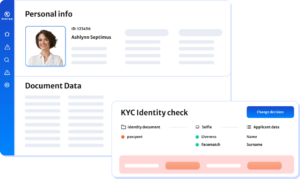
What Is KYC Verification?
The minimum requirements to open an individual financial account are clearly delimited in the CIP, including name, date of birth, address, and identification number. Connecting with real customers and foiling fraudsters in the mobile world is a challenge, but accessing mobile data and leveraging it can add an extra layer of protection. These requirements provide a solid foundation for KYC compliance, but institutions must also have a risk assessment in place to determine the exact level of risk and policy for that risk level. Compliance with KYC is monitored and enforced by various agencies, such as the Financial Action Task Force (FATF) and the Financial Crimes Enforcement Network, or FinCEN. A client’s investment knowledge and financial profile are also assessed as part of the KYC process.
Step 4 – Risk Assessment and Screening
Source of wealth verification is central — tax filings, property records, audited financials, and third-party checks. Detect suspicious transactions in real time using AI-powered pattern recognition and dynamic rule engines built for compliance teams. While the federal framework provides the foundation, KYC requirements are not one-size-fits-all. The specific rules and intensity of scrutiny vary significantly depending on the industry’s perceived risk level for money laundering and terrorist financing.
Sanctions screening is a common compliance control because regulated firms must avoid dealing with prohibited persons or entities. For example, firms often align screening controls with official sanctions frameworks such as U.S. Enter your full legal name exactly as it appears on your ID, use an unexpired government-issued document, and make sure every image is clear and fully visible.
- CIP requires all financial institutions under the BSA to comply with its regulations.
- This information helps ensure that income and capital gains are reported correctly to the tax authorities in the respective jurisdiction.
- The procedures involve establishing each customer’s identity, suitability, financial profile, and the potential risks of engaging with them.
- The following best practices outline the essential elements of a robust and sustainable KYC compliance framework.
- Automation can also improve visibility into your decision-making process, helping you reach informed decisions faster.
- Discover how banks apply AI across KYC, monitoring, and SARs to strengthen compliance and reduce alert overload.
How to Choose a KYC Software
Weak checks can let these fake identities go through, so they can be used to get credit or start accounts. The KYC process and conventional Customer Due Diligence are both harmed by this strategy. The customer verification process in banks has evolved significantly and there are best practices that can enhance the overall process and empower institutions to meet KYC verification requirements. When any abnormal or high-risk activity occurs, it is escalated as soon as it is detected. This ensures that fraud, misuse of accounts, as well as identity theft, are all avoided.
As Grey, a fintech firm, expanded into new regions, its KYC process struggled to keep up with different compliance rules and systems. Once you understand how to conduct KYC, the next step is to see how emerging technologies can make the process more efficient and accurate. An Aadhar card OCR API reads name, DOB, gender, and a masked Aadhaar number straight off the card so your KYC flow skips manual data entry. In an age of identity theft and myriad hacking, KYC has become a major emphasis by regulators.
Many compliance frameworks add risk management as a fourth element, covering the controls, training, and governance that keep the program effective. Fold anti-money laundering measures into these stages and ongoing monitoring gets sharper. Where KYC and AML work in step, compliance holds up better and the control environment becomes more transparent and easier to defend. The full form of KYC is "Know Your Customer." In casual use the term gets reduced to a single onboarding check, but for a compliance team it means an ongoing program rather than a one-time event.
USA KYC and AML Compliance: Regulations, Process, and Tools
Ensures Regulatory Compliance – An effective kyc compliance process enables businesses to meet global KYC and AML regulations across jurisdictions. By implementing structured aml and kyc process workflows, organizations can avoid penalties, maintain compliance, and ensure smooth operations. A strong kyc process is essential for secure onboarding, helping businesses meet kyc compliance requirements and prevent fraud. As regulations tighten globally, managing the KYC onboarding process is no longer optional but essential for survival. KYC is the process of identifying and verifying customers and assessing their risk, while AML is the broader program of preventing money laundering, including transaction monitoring and suspicious activity reporting.
What Are the Legal Foundations of KYC?
KYC checks are a critical component of compliance strategies, designed to verify the identity of clients and assess potential risks of illegal intentions, particularly in financial transactions. KYC obligations are expanding to more industries, verification technology is becoming more sophisticated, and regulators are demanding not just the presence of controls but proof of their effectiveness. Zero-knowledge proofs, cryptographic methods that allow identity verification without revealing the underlying data, are emerging as a privacy-preserving solution for Web3 onboarding. The EU’s AMLA will begin direct supervisory actions, establishing enforcement precedents that will ripple across global compliance programs.
WRZ